


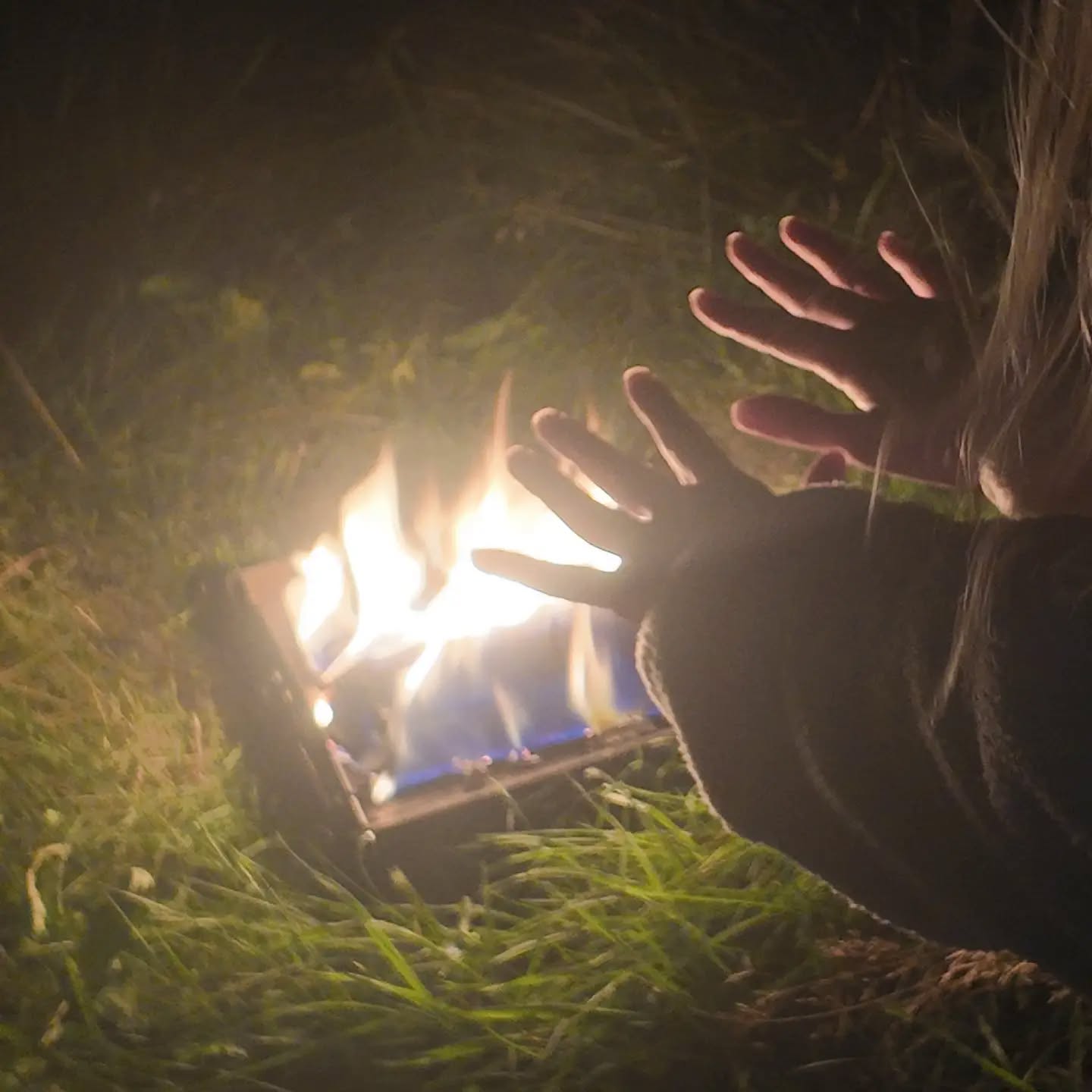
Half the magic of a night in one of Denmark’s forest shelters is sitting by a fire as it gets dark. But you can’t just light one anywhere. Here’s what the rules say, and what I learned trying to get a fire going with damp wood after a soaking wet day on the bike.
New to the shelters? Start with my guide to Denmark’s hidden network of free forest shelters.
Where can you light a fire?
Fires belong on the designated fire site, called a bålplads in Danish. The Danish Nature Agency’s guidance on sleeping outdoors talks about collecting dry branches for “your fire on the fire site”. If a shelter doesn’t have a fire site, don’t make your own.
When you search for a shelter on udinaturen.dk, look for bålplads in the listing. My guide to using udinaturen.dk in English shows you how.
A roof over a fire pit isn’t always a shelter
This one could catch you out. Some fire sites have a small roof for cover. On at least one Nature Agency fire site notice, it clearly says you’re not allowed to spend the night at the fire site or under that roof. So check the listing says shelter before you unroll your sleeping bag.
What wood can you use?
- You can collect dry, fallen branches and twigs from the forest floor.
- You can’t cut firewood or damage living trees.
At the shelter I stayed in on my way to Norway, there was a little woodshed where other people had left sticks to help the next person get a fire going. If you find one, use it kindly, and top it up before you leave if you can.
Fire bans
In dry weather, local authorities can bring in a ban on open fires. When that happens, it also applies to Nature Agency areas, including their campfire and grill sites. So a fire site being there doesn’t mean you can use it that day.
Check for current bans on the Danish Emergency Management Agency’s website, brs.dk, before you set off, and look for local signs when you arrive. If you’re not sure, don’t light it. A camping stove for your dinner is a safer plan B, but check the ban wording, because some bans cover more than campfires.
Basic fire safety
The Nature Agency’s own advice is simple:
- Never light a fire where it could spread.
- Never light one near bushes and trees.
- Always put it out completely when you’re finished.
If something goes wrong, call 112.
Getting a fire going with damp wood
My first night in a Danish shelter came after a long, wet day riding up from Germany. The wood was damp and the fire took ages. What I’d do differently:
- Carry dry tinder in a zip lock bag. Cotton wool, a few firelighters, anything that stays dry.
- Pick up twigs on the walk in, choosing the driest you can find.
- Start small. Tiny twigs first, then build up.
- Keep your lighter dry and warm, in an inside pocket.
Leave it better than you found it
Make sure the fire is out, take every bit of rubbish with you, and leave the fire site tidy for whoever comes next.
For the official rules, see the Danish Nature Agency’s guide to sleeping outside and its page May I use open fire in nature?
Planning your night? Watch my video on Denmark’s free shelters, then read the full guide to Denmark’s free forest shelters.