
I once rode an hour in the dark, then down a 5 km muddy forest track, to reach a free emergency cabin in Swedish Lapland, only to find it boarded up. (Here’s the video.) So this guide is partly about finding Sweden’s free shelters and partly about not making my mistake.
The types of free shelter in Sweden
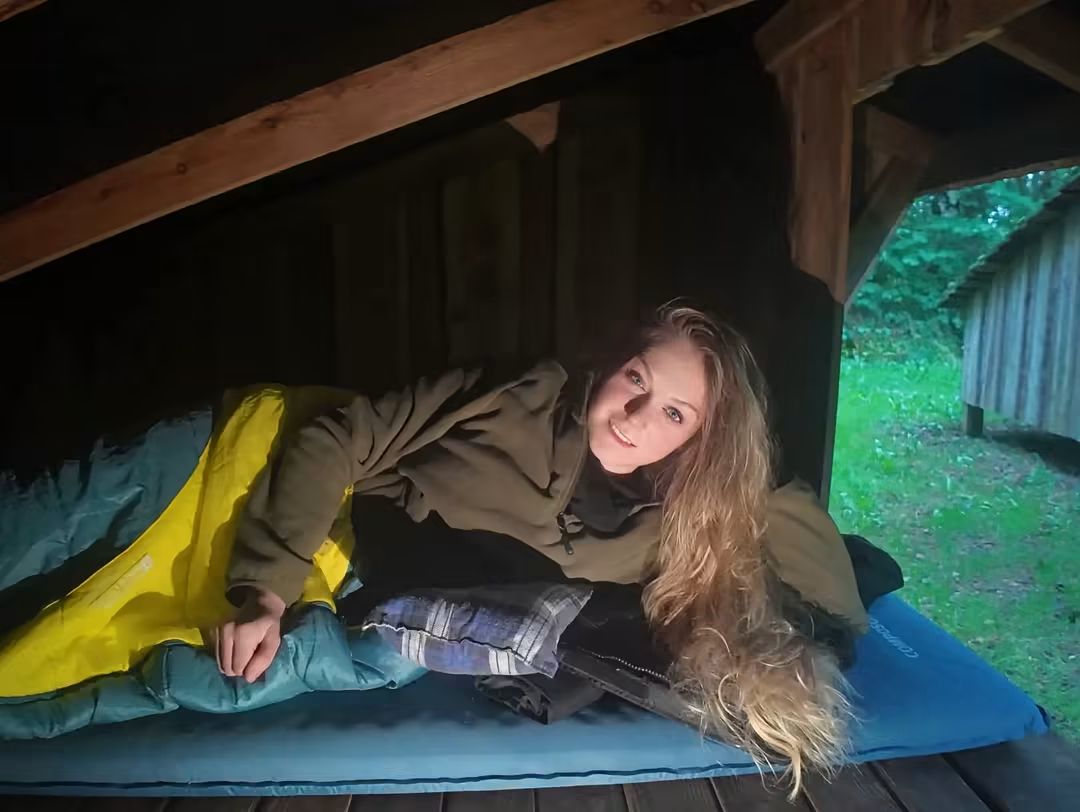
- Vindskydd (wind shelter). A three-walled wooden lean-to, open on one side, usually with a fire pit nearby and sometimes firewood. These are the most common, and you use them on a first come, first served basis.
- Raststuga (rest cabin). A small, enclosed hut, sometimes with a stove. Some are meant for day use only, so check whether overnight stays are allowed unless it’s a genuine emergency.
- Emergency and mountain cabins. In the far north, the county administrations look after cabins for staff, reindeer herders and the public. Many of the bigger mountain huts are run by the Swedish Tourist Association (STF) and aren’t free.
- Free one-night cottages. A handful of old forest and farm cottages around Sweden are free to stay in for one night. You can’t book them.
How to find them
- Shelter maps and apps. Community shelter maps for Sweden list thousands of places, often with photos and notes, so you can get a good idea of a spot even if you don’t speak Swedish.
- Local tourist offices. Ask what’s nearby, whether it’s open, and how to get there.
- Locals and other travellers. The best information I got on this trip came from people I met along the way.
How to check it’s actually open
The cabin I headed for had a glowing review from bikers just two weeks earlier. It still wasn’t open when I got there. Reviews tell you what a place was like, not what it’s like today.
- Read the most recent comments, not just the photos. Look for mentions of closures, storm damage or locked doors.
- Check the season. Some cabins close outside the main season or are only open at certain times.
- Check who runs it. If the owner is listed, it’s worth a quick message or call.
- Look at the access. A storm can turn a fine track into an obstacle course. Ask yourself whether you could get the bike back out if it’s worse than expected.
Always have a plan B
- Carry a tent, always. It’s what saved my night. Under Sweden’s right of public access, you can usually pitch a tent for a night or two away from homes and farmland.
- Arrive in daylight. Finding out a cabin is shut is much worse at 11pm.
- Keep the bike on proper tracks. Sweden bans riding motor vehicles off-road, so plan to park up and walk in if the cabin is off the road network.
- Tell someone where you’re going, especially if you’re solo and somewhere remote.
Shelter etiquette
- Leave it cleaner than you found it, and take your rubbish with you.
- Replace any firewood you use if you can.
- Share the space. Nobody owns a shelter just because they got there first.
- Check for fire bans before lighting anything.
Want to compare Sweden with its neighbours? Here’s free camping in Scandinavia on a motorcycle: Denmark vs Norway vs Sweden.