
When you think of travelling through Scandinavia on a budget, Denmark might not be the first country that comes to mind. But tucked away in its forests, along its coastlines and throughout its countryside is a network of outdoor shelters that could save adventurous travellers a considerable amount of money.
These simple wooden structures offer an alternative to traditional campsites, hotels and hostels. Many are completely free to use.
As someone who spends a considerable amount of time travelling by motorcycle, I’m always interested in alternative places to stay. Accommodation can quickly become one of the biggest expenses on a long-distance motorcycle adventure, particularly when travelling through Scandinavia.
In my latest video, I explore Denmark’s outdoor shelters and why more motorcyclists should know about them.
Watch my video: The Hidden Cabins of Denmark Every Motorcyclist Should Know About
What Are Denmark’s Forest Shelters?
Known locally as shelters, these simple overnight structures can be found throughout the Danish countryside.
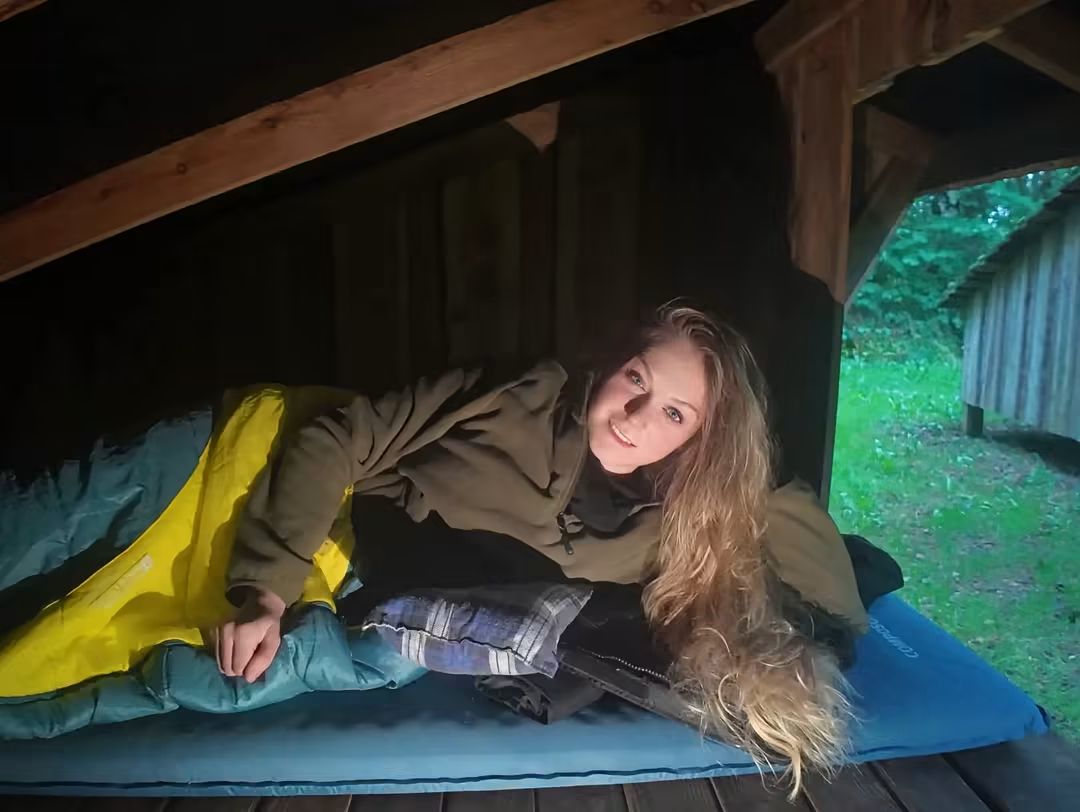
Unlike traditional holiday cabins, they generally consist of a raised wooden sleeping platform, a roof and three enclosed sides, leaving the front open to the surrounding landscape.
They’re designed for people who want to spend time outdoors without necessarily carrying a tent or paying for conventional accommodation.
Depending on the location, you may find facilities such as:
- Designated campfire areas
- Picnic benches
- Basic toilets
- Drinking water
- Space to pitch a tent
- Multiple sleeping shelters
Facilities vary considerably between locations, so it’s always worth researching your intended overnight stop before arriving.
Denmark’s official outdoor activity directory, Ud i Naturen, lists more than 1,800 shelters across the country. Not all are free, but many publicly managed shelters provide overnight accommodation without charge.
Can You Really Sleep for Free in Denmark?
Yes, although it’s important to understand the difference between publicly managed shelters and privately operated facilities.
The Danish Nature Agency, known as Naturstyrelsen, provides free overnight accommodation at its primitive camping areas, some of which include wooden shelters.
These sites are intended for individuals, families and small groups looking to enjoy the outdoors.
Other shelters may be operated by local authorities, organisations or private landowners and can have their own charges and booking requirements.
You shouldn’t assume that every shelter is free simply because it appears on an outdoor camping map.
Nevertheless, Denmark offers an impressive number of opportunities to reduce accommodation costs while exploring the country.
Why These Shelters Are So Appealing to Motorcycle Travellers
One of the biggest challenges of motorcycle camping is luggage space.
Everything you need for your adventure has to fit somewhere on the motorcycle. A tent, sleeping bag, sleeping mat, cooking equipment and clothing can quickly take up valuable space.
An overnight shelter offers the possibility of spending a night outdoors without having to pitch a tent.
For motorcyclists travelling long distances, the advantages could include:
- Lower accommodation costs
- Less time spent setting up camp
- Shelter from rain
- Opportunities to meet other travellers
- Access to quieter parts of the countryside
- Greater flexibility when planning an adventure
However, I would still recommend carrying a tent as a backup. Arriving at a shelter after a long day of riding only to discover that it’s already occupied is not something you want to experience without an alternative plan.
Are Motorcycles Allowed at Danish Forest Shelters?
This is one of the most important things motorcyclists need to understand.
Permission to sleep somewhere does not automatically mean you have permission to ride your motorcycle there.
Motorised access to Denmark’s state forests and natural camping areas is generally restricted. Unless vehicle access is specifically permitted, you should expect to leave your motorcycle in an authorised parking area and continue to the shelter on foot.
Some locations may also have restrictions on who can use the overnight facilities, so check the individual site listing.
Never assume you can follow a forest track simply because your motorcycle is capable of riding along it.
Respecting these restrictions helps protect the natural environment and preserves these facilities for future travellers.
How to Find Free Camping Shelters in Denmark
One of the most useful resources for planning an outdoor adventure in Denmark is the official Ud i Naturen website.
Find Danish outdoor shelters here: https://udinaturen.dk/
The website provides an interactive map of outdoor facilities throughout Denmark, including shelters, primitive camping areas, walking trails and campfire sites.
Some useful Danish words to look out for include:
- Shelter: Overnight shelter
- Primitiv overnatningsplads: Primitive overnight camping area
- Fri teltning: Free tent camping
- Bålplads: Campfire area
- Drikkevand: Drinking water
- Toilet: Toilet
Before setting off, check the facilities, booking arrangements, overnight restrictions and parking options at your chosen location.
It’s also worth saving several alternative shelters along your route in case your preferred location is unavailable.
Do You Need to Book Denmark’s Forest Shelters?
It depends on the shelter.
Some operate on a first-come, first-served basis, while others can be reserved in advance.
At primitive overnight sites managed by the Danish Nature Agency, stays are generally limited to two consecutive nights.
Making a reservation at a bookable shelter can give you priority, but other travellers may still be allowed to use the surrounding camping area.
You can find official booking information through:
https://book.naturstyrelsen.dk/
If you’re travelling during the summer holidays or visiting particularly popular locations, having a backup plan is a sensible precaution.
What Equipment Should You Bring?
Although these shelters provide a roof over your head, they are not hotels or fully equipped holiday cabins.
I would approach staying in one in much the same way as preparing for a conventional motorcycle camping trip.
My recommended equipment would include:
- A sleeping bag suitable for the expected temperature
- An insulated sleeping mat
- A head torch
- Drinking water
- Food and cooking equipment
- Warm clothing
- Insect repellent
- Portable charging equipment
- A backup tent
- Rubbish bags
Because many shelters have an open front, you’ll still be exposed to cold air, insects and potentially wind-driven rain.
Choosing appropriate sleeping equipment remains important, particularly if you’re travelling outside the summer months.
Could Denmark Be One of Europe’s Overlooked Budget Adventure Destinations?
Denmark is often viewed as a country to pass through on the way to Norway or Sweden.
But its network of outdoor accommodation gives adventurous travellers a reason to slow down and explore what the country itself has to offer.
You don’t necessarily need dramatic mountain passes or remote Arctic landscapes to have a memorable motorcycle adventure.
Sometimes, a quiet woodland shelter and an evening spent outdoors can offer just as rewarding an experience.
For those travelling on a limited budget, the opportunity to reduce accommodation costs could make a longer Scandinavian adventure more achievable.
It’s an interesting reminder that motorcycle travel doesn’t always have to be expensive.
Responsible Camping in Denmark
Facilities like these are a privilege, and it’s important that travellers use them responsibly.
Leave the shelter clean, take your rubbish with you, respect other visitors and avoid unnecessary noise.
Only light fires where permitted, observe temporary fire restrictions and never damage trees or surrounding vegetation.
Most importantly, respect local rules concerning motorised access.
The more responsibly we use these facilities, the better chance future travellers have of enjoying them.
Final Thoughts
Denmark’s network of outdoor shelters offers an interesting alternative to conventional accommodation for anyone who enjoys travelling independently.
Whether you’re exploring Scandinavia by motorcycle, bicycle or on foot, these simple structures could help you travel further while spending less.
For me, it’s another example of why researching the places we travel through can reveal opportunities that might otherwise go unnoticed.
If you’re planning a motorcycle adventure through Denmark, Norway or Sweden, these shelters are certainly worth investigating.
Watch my full video to explore Denmark’s outdoor shelters:
Official resources
For further information, current regulations and shelter locations:
- Danish Nature Agency overnight camping guidance: https://eng.naturstyrelsen.dk/experience-nature/sleeping-outside-in-nature
- Official Danish outdoor activity map: https://udinaturen.dk/
- Danish Nature Agency shelter bookings: https://book.naturstyrelsen.dk/