
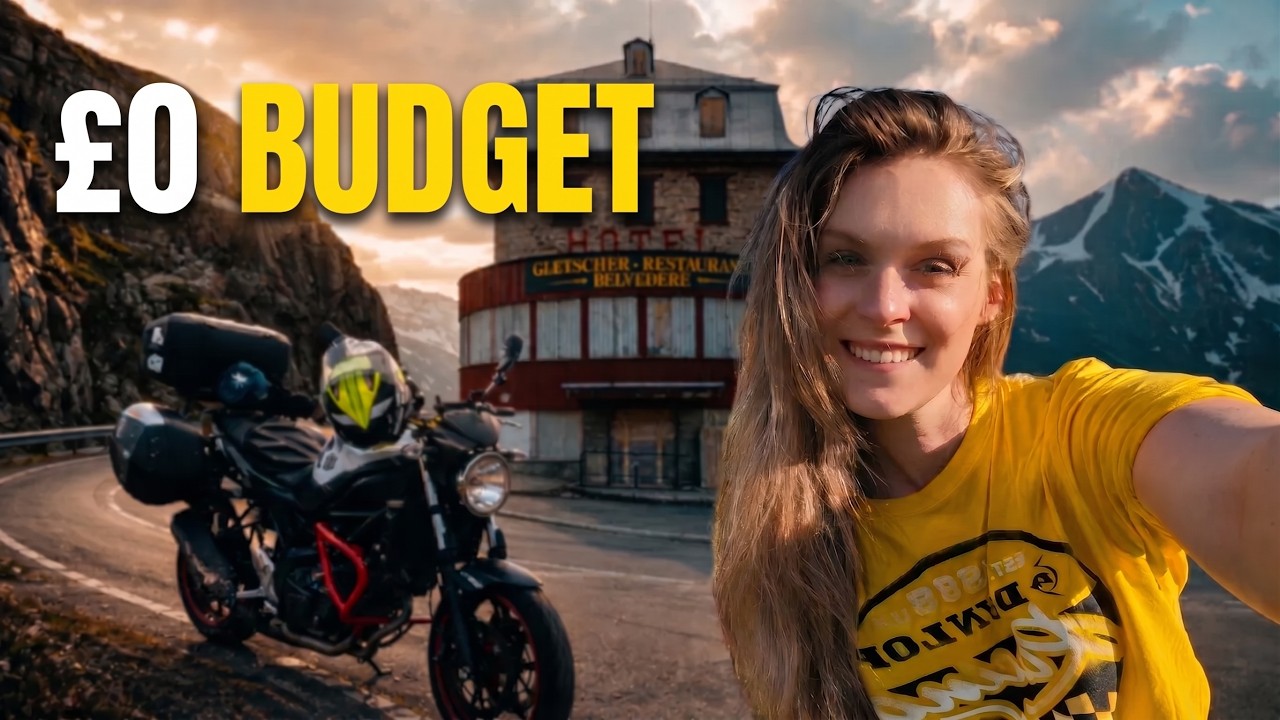
Riding a high Alpine pass looks effortless in videos. In reality, I found it one of the most draining things I’ve ever done on a motorcycle. On my budget tour of Switzerland, I rode the Grimsel and Furka passes back to back, and by the end of the second one I knew I had to stop.
This isn’t a route guide. It’s about what happens to you, and your bike, when you ride high, and the things I’d want to know before doing it again.
The temperature drop is instant
I started at the bottom of the Grimsel in a heatwave, sweating through my base layers. As the road climbed, the temperature dropped around 20 degrees in about four miles. Ten minutes earlier I’d been cooking. Now I was looking at snow-capped peaks with a numb nose.
The air changes too. It goes from smelling of hot tarmac and pine needles to smelling of almost nothing: cold, sharp and empty. My base layers went from soaked with warm sweat to soaked with cold sweat, and every gear change felt like fighting through a layer of ice.
What I’d do: wear layers you can add at the top without fully unpacking, and expect to be too hot and too cold on the same day.
The wind is a real problem
At the top of the Furka, the wind was so strong it felt like it was trying to push the bike right off the road. It treated me and my bike like a pair of kite sails. Near the tops, some sections were icy too, even in summer.
What I’d do: take it slowly near the summits, give yourself extra room and don’t feel pressured by faster riders. Locals seem to fly past. That’s fine.
Your bike feels it too
As the air thinned, I could feel my 10-year-old bike struggling. It was a constant dance between throttle and brakes on hairpins that fold back on themselves, with a drop that felt about six inches from my right-hand side.
Fatigue creeps up on you
This was the big one. High altitude riding takes so much concentration that it drains you far faster than ordinary riding. After two passes I could feel my reaction times slowing. My focus wasn’t all there, and every hairpin felt like I had nothing left in the tank.
On a budget trip there’s no safety net. If you slide, or break down, there’s no recovery truck you can afford. So I made the call not to ride the third pass, the Susten, and to find somewhere to sleep instead.
Why I’m glad I stopped
There’s no prize for finishing a loop exhausted. A local biker pointed me to an organic chicken farm that allowed camping for 5 francs, tourist tax included, and the relief of switching off the engine after hours of Alpine climbing is a feeling you can’t buy. The Susten will still be there next time.
My checklist for high altitude riding
- Eat before you climb. I had tuna on bread at the bottom.
- Carry a hot drink. A flask beats paying summit cafe prices.
- Layer for heat and cold on the same day.
- Expect strong wind and possible ice near the top.
- Take breaks between passes, even short ones.
- Know where you’ll sleep before the light drops. When the sun goes, the temperature follows.
- If your focus is going, stop. Seriously.
Watch this episode on its own page here. For the passes themselves, read my guide to riding the Grimsel, Furka and Susten passes.